Watching your child’s smile grow is one of the joys of parenting, and at some point many parents start to wonder whether braces are in the picture. If you are weighing braces for kids in Orlando, this guide covers the basics: when to start, what the first visit looks like, the options available, and how to set your child up for a smooth experience.
When Should Kids Start Thinking About Braces?
Every child develops differently, and there is no single right moment that applies to everyone. Orthodontists generally recommend an early check during childhood so any developing issues can be spotted, even if treatment does not begin right away. For many children, active braces treatment happens later, once more permanent teeth have come in. An evaluation is the only reliable way to know where your child stands, and it gives you a plan instead of guesswork.
Signs Your Child May Benefit From Braces
A few common signs are worth watching for:
- Crowded, crooked, or overlapping teeth
- Noticeable gaps between teeth
- An overbite, underbite, or crossbite
- Difficulty chewing or biting
- Mouth breathing or thumb sucking that has continued past the early years
- Teeth that do not meet properly when the mouth is closed
If any of these sound familiar, it does not necessarily mean treatment is urgent. It simply means an evaluation is a smart next step.
What Happens at the First Visit
The first appointment is relaxed and informative. The orthodontist examines your child’s teeth, jaw, and bite, often with images, and talks through whether treatment is needed now or whether it makes sense to monitor and wait. You will leave with a clear understanding of your child’s situation and any recommended next steps. We see children as part of our orthodontic care for all ages, and the visit is a great chance to ask questions.
Braces Options for Children
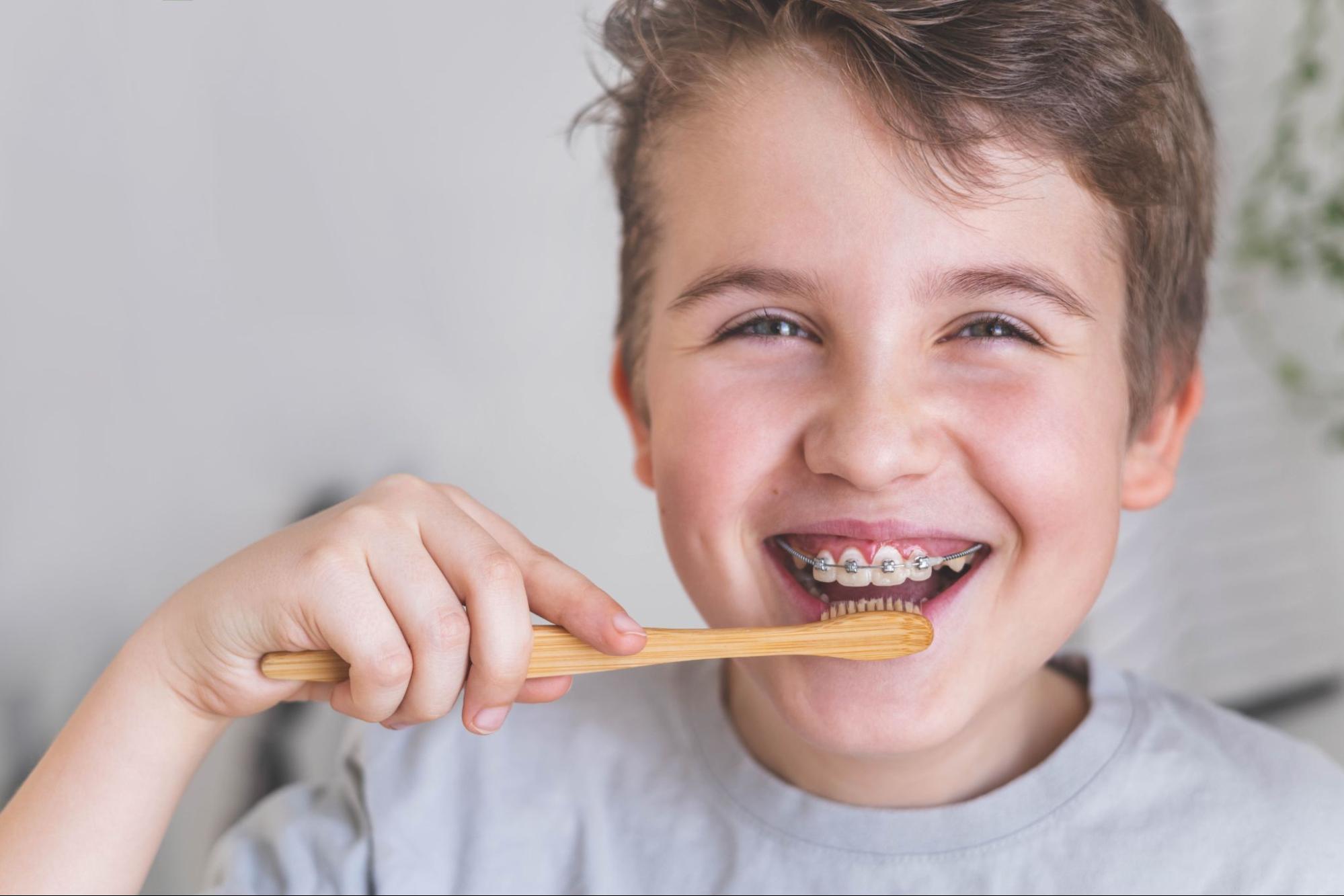
When treatment is recommended, kids have solid options. Traditional metal braces are a common and effective choice for children, and many kids enjoy picking colorful bands to make them their own. Depending on the case and the child’s age, other approaches may be on the table too. Our overview of the types of braces walks through each one in more detail.
Helping Your Child Succeed With Braces
A little preparation goes a long way:
- Build a good routine. Brushing and flossing matter even more with braces, so help younger kids stay consistent.
- Mind the menu. Sticky and hard foods can damage brackets and wires, so plan snacks accordingly.
- Keep appointments. Regular adjustments keep treatment on schedule.
- Stay positive. Framing braces as a step toward a healthy, confident smile helps kids feel good about the process.
Getting Started in Orlando
If you think your child may be ready for an evaluation, the easiest next step is a visit. You can learn more about our full approach to Orlando braces or stop by our Orlando office to get started.
Frequently Asked Questions
What age should kids get braces?
It varies by child. Orthodontists often recommend an early evaluation during childhood, while active treatment frequently begins later, once more permanent teeth have come in. An evaluation is the best way to know.
How do I know if my child needs braces?
Signs include crowding, gaps, an overbite or underbite, and difficulty chewing. If you notice any of these, an evaluation can tell you whether treatment is needed and when.
What type of braces are best for children?
Metal braces are a common and effective choice for kids, and many children enjoy choosing band colors. The best option depends on the case and the child’s age, which an orthodontist can assess.
Does my child need a referral to see an orthodontist?
No referral is required to schedule a consultation. You can book an evaluation directly to find out whether your child would benefit from treatment.